LinkedIn Profile Optimisation: Be Found by Recruiters and Plan Your Next Move
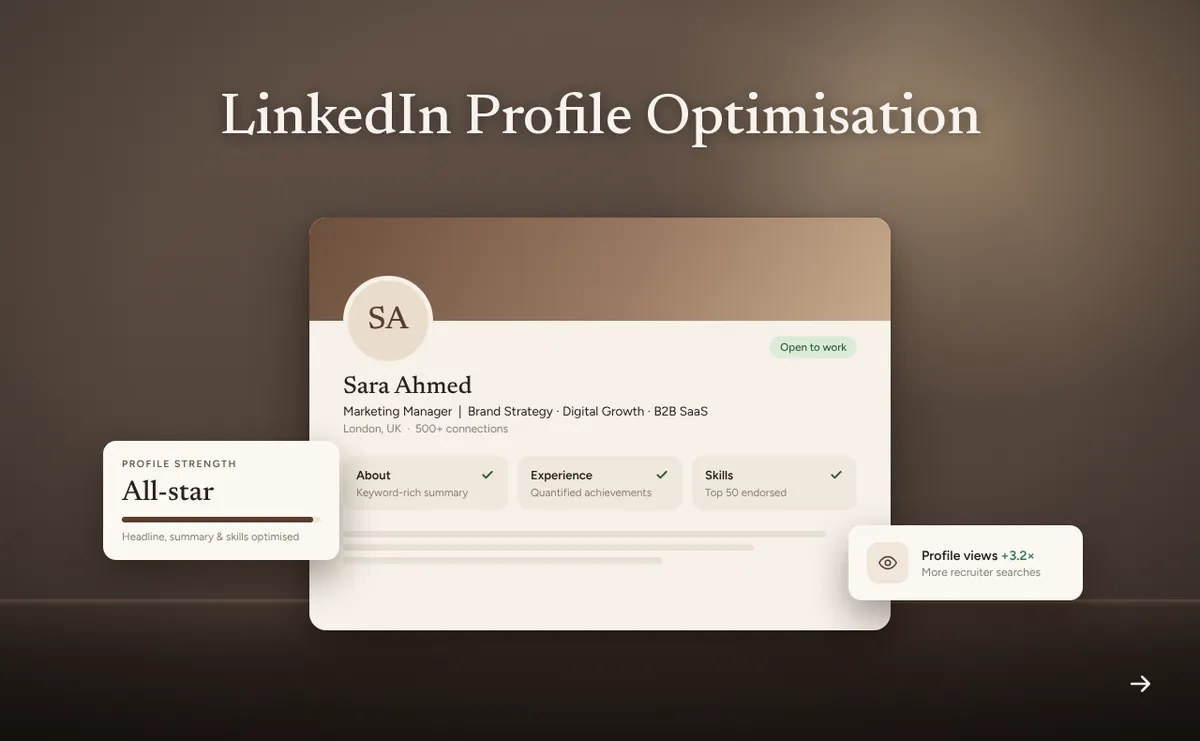
For many roles, your LinkedIn profile is the first thing a recruiter or hiring manager looks at, sometimes before they open your CV. A clear, up-to-date profile helps the right people understand what you do. It can also make it easier for them to find you in the first place.
This guide covers the parts of a profile that matter most, and then looks at how a career consultation can help if you are not yet sure what you want to do next.
How people find profiles
Recruiters generally search by job titles, skills, locations and keywords, and the platform decides which profiles to show. Nobody outside the platform can promise how it ranks results, and its behaviour changes over time. What you can do is make your profile complete, accurate and written in the language people use when they search for your kind of work.
The parts of your profile that matter most
Your photo and banner
Use a clear, friendly photo in which your face is easy to see, taken in good light with a plain background. A simple banner image that fits your field is optional, but avoid anything cluttered.
Your headline
The headline appears everywhere your name does, so it does a lot of work. Instead of only your current job title, consider saying what you do and who you help, in plain words. For example, "Registered nurse | Adult care | Open to new roles" is clearer than a slogan. Keep it truthful and specific.
Your About section
Write a short summary in the first person. Cover what you do, what you are good at and what you are looking for. Use short paragraphs, and put the most important points first, since many readers will only see the first few lines.
Experience
Mirror your CV, but you can be a little more conversational. For each role, describe what you did and what you achieved, using real details only. Add relevant keywords naturally rather than stuffing them in.
Skills, education and licences
List the skills that genuinely reflect your work, and put the most important ones first. Add your education, training and any relevant licences or certifications. Ask people who have worked with you if they would be willing to endorse your skills or write a recommendation, and only accept what is accurate.
Settings and good habits
- If you are looking for work, check the settings that let recruiters know you are open to opportunities, and think about who can see that.
- Customise your profile web address so it is short and tidy.
- Keep your profile consistent with your CV, particularly job titles and dates.
- Review your public visibility settings so you know what others can see.
- Update your profile when something changes, even if it is small.
Be active in a way that suits you
You do not need to post every day. Reacting thoughtfully to others' posts, sharing something useful you have learned or following organisations you admire is enough to show that your profile is alive. Be professional: remember that employers can see what you share.
When you are not sure what comes next
A better profile helps if you know what you want to be found for. But many people reach a point where they are unsure: they want a change, but not which change, or they are not sure how their experience translates to a new field or country.
What a career consultation is
A career consultation is a conversation about where you are now, what you want and what your options might be. It is not a test, and nobody can predict your future. It gives you time and space to think, with someone who can ask useful questions and suggest practical next steps.
Things you might discuss
- Which of your skills and experiences are most transferable.
- Which roles or sectors might suit you, and what they usually ask for.
- Whether you need extra training, a licence or registration for a particular route.
- How to present your CV and profile for a change of direction.
- A realistic, step-by-step plan you can start on straight away.
Getting ready for a consultation
- Bring your current CV and a link to your LinkedIn profile.
- Write down what you enjoy and what you want to leave behind.
- List any practical limits, such as location, hours or timing.
- Prepare a few questions you would like answered.
How we can help
Our team offers LinkedIn profile making and optimisation, to help your profile say clearly who you are and what you do, and career consultation for talking through your next steps. We cannot promise views, messages, interviews or job offers; they depend on many factors beyond a profile or a conversation. (Placeholder: confirm the length and format of a consultation.)
Your profile and your CV should tell the same story, so you may like our guide to writing a CV that gets noticed. To talk about what you need, browse our services or get in touch.